
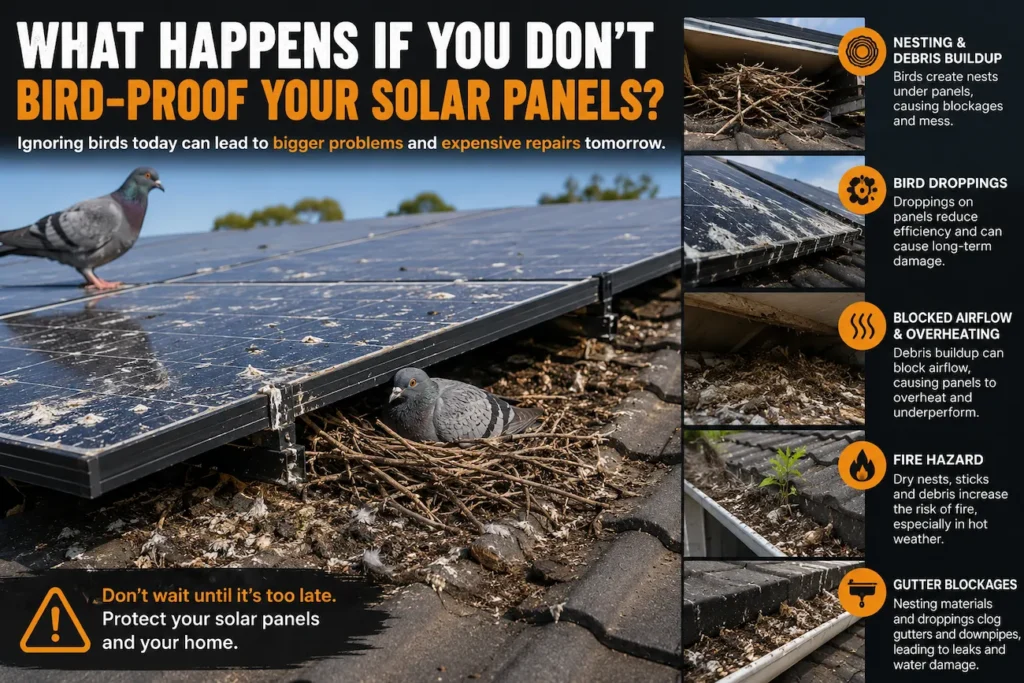
What Happens If You Don’t Bird-Proof Your Solar Panels?
If pigeons have started nesting under your solar panels, ignoring the problem usually makes things worse.
A lot of Sydney homeowners think:
“it’s only a couple of birds”
or
“they’ll leave eventually”.
But from what we’ve seen working on roofs across Sydney, pigeons rarely leave on their own once they’ve settled under solar panels.
In many cases, what starts as a bit of bird noise turns into:
- large nest build-ups
- clogged gutters
- heavy bird droppings
- ongoing noise early in the morning
- dirty solar panels
- and in some cases, roof or wiring issues
The longer the problem is left untreated, the bigger the cleanup usually becomes.
Why Birds Love Nesting Under Solar Panels
Solar panels create a sheltered gap underneath that pigeons love using for nesting.
It protects them from:
- rain
- wind
- predators
- and harsh weather
Once pigeons decide a roof is a safe nesting spot, they often keep returning to the same location year after year.
One of the biggest misconceptions homeowners have is thinking the birds are only there temporarily.
In reality, pigeons are very location-oriented. If they successfully nest under your panels once, there’s a good chance they’ll come back again during future nesting seasons.
And often, they don’t come back alone.
We’ve seen situations where a small pigeon problem slowly turned into a large colony living under the panels because the issue was ignored for too long.
The Early Warning Signs Most Homeowners Notice
Usually, the first signs are fairly subtle.
Many homeowners first notice:
- pigeons hanging around the roof regularly
- birds flying under the panels
- noises early in the morning
- or pigeons carrying sticks into the roof area
If you see pigeons consistently returning to the same area every day, there’s a good chance they’re starting to nest.
One thing we often tell homeowners is to look at the gap underneath the solar panels from the ground if possible.
Normally, you should be able to see light coming through underneath the panels.
If the gap looks dark or blocked off, that can sometimes mean nesting material has started building up underneath.
What Can Actually Happen If You Ignore the Problem?
Not every roof reaches extreme levels, but we’ve seen some very serious nesting situations over the years.
One of the worst jobs we attended had:
- around 6–10 nests under the panels
- more than 10 pigeons living on the roof
- dead birds trapped underneath
- egg shells and nesting debris everywhere
- major droppings build-up
- clogged gutters
- and even plants growing inside the built-up debris
The homeowners originally only complained about hearing birds in the morning.
They had no idea how bad things had become underneath the panels.
1. Gutters Can Become Blocked
Over time, nests, sticks, feathers and droppings wash into the gutters.
This can eventually lead to:
- blocked drainage
- overflowing gutters
- water build-up
- corrosion
- and potential water damage
The longer birds stay on the roof, the worse this usually becomes.
2. Bird Droppings Build Up Quickly
Bird droppings don’t just stay underneath the panels.
We often see:
- droppings across the roof
- droppings on pathways and outdoor areas
- dirty gutters
- and solar panels covered in grime
Aside from looking bad, heavy droppings on the panel surface can reduce how much sunlight reaches the panels.
In many cases, homeowners notice cleaner-looking panels and improved solar performance after professional solar panel cleaning is done.
3. Noise Gets Worse Over Time
One of the biggest complaints we hear is noise.
At first, homeowners might only hear occasional movement.
But once nesting starts properly, it can become constant:
- scratching
- movement under the panels
- pigeons landing on the roof
- cooing early in the morning
- and ongoing roof activity
Many customers tell us the noise starts waking them up early every morning.
4. Wiring and Roof Areas Can Be Affected
We’ve also seen cases where bird activity underneath the panels affected wiring placement.
Normally, solar cables should be secured neatly underneath the system.
But with constant bird movement and nesting underneath the panels, we’ve seen cables pulled loose and sitting directly on the roof surface.
We’ve also seen:
- scratches on Colorbond roofs
- roof paint wearing away
- tile movement
- and heavy contamination around gutters
Not every property will experience serious damage, but the longer nesting continues, the greater the risk becomes.
5. The Problem Usually Gets Bigger — Not Smaller
This is the biggest thing homeowners underestimate.
Pigeons rarely “move on” by themselves once they’ve established a nesting area.
In fact, the longer they stay:
- the more comfortable they become
- the more they return
- and the more difficult the problem becomes to fully resolve
We’ve noticed that homes dealing with the issue early usually:
- require less cleanup
- have less roof contamination
- and see pigeons leave faster after bird proofing is installed
Homes that leave it for years often deal with:
- larger colonies
- heavier clean-outs
- more stubborn pigeon activity
- and bigger overall cleanup jobs
Prevention Is Usually Easier Than Waiting
The best time to bird-proof solar panels is before the nesting becomes severe.
In many Sydney suburbs, homeowners only take action once the problem becomes impossible to ignore.
But prevention is almost always easier, cleaner and cheaper than dealing with years of nesting and contamination later.
If you already notice:
- regular pigeon activity
- noise
- birds carrying nesting material
- or neighbours getting bird proofing installed
it’s usually worth acting sooner rather than later.
What Happens After Bird Proofing Is Installed?
Once proper bird proofing is installed, most homeowners notice a big difference fairly quickly.
Common things customers mention include:
- less noise
- fewer pigeons on the roof
- cleaner gutters
- reduced mess
- and peace of mind knowing the nesting area is sealed off
For homes with heavy contamination, combining bird proofing with professional solar panel cleaning can also help restore the overall cleanliness of the roof area.
Our solar panel bird proofing service in Sydney uses stainless steel mesh and non-invasive installation methods designed specifically for solar systems.
You can also read our bird proofing cost guide for Sydney homeowners if you want a breakdown of pricing factors and what affects installation costs.
Final Thoughts
If there’s one piece of advice we’d give Sydney homeowners, it’s this:
Don’t ignore the problem.
Pigeons nesting under solar panels usually do not leave on their own, and waiting often turns a manageable issue into a much larger cleanup later.
Whether you decide to handle it yourself or hire a professional, taking action early can save a lot of stress, mess and unnecessary expense down the track.
FAQ's
Can pigeons damage solar panels?
Pigeons usually don’t damage the panels themselves directly, but nesting activity underneath can contribute to issues like loose wiring, heavy contamination, blocked gutters and roof wear over time.
You can also read our guide on bird-related solar panel damage for more detailed information.
Will pigeons leave on their own?
In most cases, no. Pigeons are very location-oriented and often return to the same nesting spot repeatedly once they’ve settled under solar panels.
How do I know if birds are nesting under my solar panels?
Common signs include:
- regular pigeon activity
- birds carrying sticks
- scratching or cooing sounds
- droppings around the roof
- or visible nesting material underneath the panels
Is bird proofing worth it?
For many homeowners, bird proofing helps prevent ongoing nesting, mess, noise and cleanup issues before they become more severe.
Can bird proofing be added to existing solar panels?
Yes. In most cases, bird proofing can be installed on existing solar systems without removing the panels completely.
Does bird proofing require drilling into the roof or panels?
Professional bird proofing systems are commonly installed using solar panel clips and perimeter mesh systems that avoid drilling into the roof or panels.