Professional Bird Proofing Solar Panels Sydney: What to Expect
If you’ve got pigeons nesting under your solar panels, hiring a professional bird proofing company can save a lot of frustration, cleanup and long-term roof issues.
But many Sydney homeowners aren’t exactly sure what the process involves.
Common questions we hear include:
- Will it damage the roof?
- Does it involve drilling?
- Will it affect the solar warranty?
- Will the mesh look ugly?
- How long does it last?
- Will the birds actually stay away?
The good news is that professional bird proofing is usually a very straightforward process when it’s done properly.
Why Homeowners Choose Professional Bird Proofing
A lot of people first try:
- spikes
- DIY kits
- fake owls
- sound deterrents
- or cheap hardware-store materials
But in many cases, the pigeons simply keep coming back because access underneath the panels was never fully blocked.
Professional bird proofing focuses on solving the actual problem:
preventing birds from getting underneath the solar panels in the first place.
That’s why properly installed perimeter mesh systems are usually much more effective long term.
You can also read our comparison guide between bird mesh and spikes for solar panels.
The Most Common Concerns Homeowners Have
“Will It Damage My Roof?”
This is probably the biggest concern we hear, especially from homeowners with:
- tiled roofs
- terracotta tiles
- or older roofing materials
A professional installation should avoid unnecessary roof damage.
That means:
- using proper roof access methods
- understanding how to move safely on tiles
- and avoiding shortcuts that can crack or damage roofing materials
“Do You Drill Into the Roof or Solar Panels?”
Professional bird proofing systems should not require drilling into the solar panels themselves.
Modern systems commonly use specialised solar clips designed to attach mesh securely without damaging the solar system.
This is one reason many homeowners prefer specialist bird proofing companies rather than general handymen.
“Will Bird Proofing Affect My Solar Warranty?”
This is another very common concern.
Homeowners are understandably cautious about anything being attached around their solar system.
That’s why installation methods matter.
Using non-invasive mounting methods designed specifically for solar panels is generally the preferred approach.
Our solar panel bird proofing service in Sydney uses stainless steel mesh systems and solar clips designed to avoid drilling into the roof or panels.
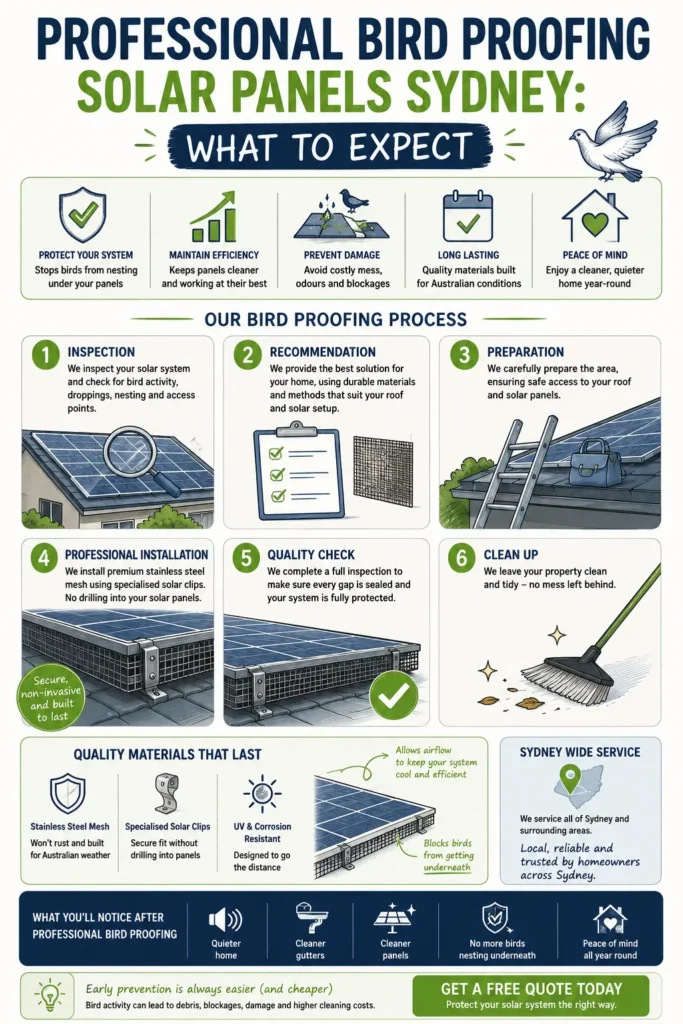
What Happens During a Professional Bird Proofing Job?
Every roof is slightly different, but the process usually follows a similar structure.
1. Assessing the Situation
The first step is understanding:
- how severe the nesting is
- how long the pigeons have been there
- the panel layout
- and what type of roof the system is installed on
Some homes only have early signs of activity.
Others already have significant nesting underneath the panels.
2. Inspecting Underneath the Panels
This is usually the stage that surprises homeowners most.
Many people know pigeons are on the roof, but they don’t realise how much nesting material and debris has built up underneath the solar system.
We regularly find:
- large nests
- heavy droppings
- feathers
- sticks
- blocked gutters
- and significant mess underneath the panels
In severe cases, homeowners are shocked by how bad the hidden buildup actually became.
You can also read our guide explaining what happens if bird nesting is ignored for too long.
3. Cleaning Out Nests and Debris
Before the mesh is installed, the nesting material needs to be properly removed.
This usually involves:
- clearing debris
- removing nesting material
- checking gutters nearby
- and ensuring no birds remain trapped underneath
This step is important because simply sealing over active nesting areas without proper cleanup can create ongoing issues later.
4. Installing the Mesh Barrier
Once the area is cleared, the perimeter mesh is installed around the solar array.
A professional installation should:
- fit tightly and neatly
- fully close access points
- sit securely against the panels
- and adjust properly around corners, pipes and roof obstacles
The goal is to stop pigeons from physically accessing underneath the panels while still allowing airflow around the system.
What a Good Installation Should Look Like
A properly installed system should look:
- neat
- level
- secure
- and professionally finished
The mesh should:
- sit tightly without sagging
- follow the panel layout cleanly
- and avoid obvious gaps
One thing homeowners often notice after a professional installation is that the mesh is usually far less visually noticeable than they expected.
Why Experience Matters
One of the biggest differences between a specialist bird proofing company and a general handyman is experience with:
- solar systems
- roofing safety
- panel layouts
- and long-term installation quality
We’ve seen many failed installations where:
- cheap materials were used
- corners were left open
- spikes were installed incorrectly
- mesh was loose
- or poor-quality fasteners failed over time
In many cases, homeowners end up paying twice:
once for the failed attempt, then again for the proper fix later.
A specialist installer is more likely to:
- use proper materials
- understand solar systems
- install the mesh cleanly
- and avoid causing unnecessary roof issues
What Happens After the Installation?
Once the system is professionally bird proofed, most homeowners notice the difference pretty quickly.
The most common things people mention are:
- quieter mornings
- fewer pigeons on the roof
- cleaner gutters
- less mess
- and peace of mind
The biggest benefit is usually knowing that birds can no longer access underneath the panels to build nests.
When installed properly, a good bird proofing system should provide long-term protection for many years.
Optional Solar Panel Cleaning
In many cases, roofs with heavy pigeon activity also have significant droppings and grime on top of the solar panels themselves.
That’s why many homeowners combine bird proofing with professional solar cleaning at the same time.
Our professional solar panel cleaning service in Sydney is commonly booked alongside bird proofing installations for this reason.
Final Thoughts
Professional bird proofing is about more than simply attaching mesh around solar panels.
A good installation should:
- solve the nesting problem properly
- protect the roof and solar system
- look neat and professional
- and provide long-term peace of mind
For most Sydney homeowners, the biggest relief after installation is simply knowing there’s no longer a hidden pigeon nesting area underneath the panels causing mess, noise and ongoing problems.
FAQs
Can solar panels be cleaned at the same time?
Yes. Many homeowners choose to combine bird proofing with cleaning if the panels have heavy droppings or grime buildup.
You can also read our solar panel cleaning guide for Sydney homeowners.
What type of mesh is used for solar panel bird proofing?
Professional systems commonly use stainless steel mesh with specialised mounting clips designed specifically for solar systems.
Can pigeons come back after bird proofing?
If the mesh system is installed properly and all access points are sealed correctly, pigeons are generally unable to nest underneath the panels again.
Is professional bird proofing worth it?
For many homeowners, professional bird proofing helps prevent ongoing nesting, roof contamination, gutter blockages and repeated pigeon activity long term.
Will bird proofing damage my roof?
A properly trained installer should use safe roof access methods and installation techniques designed to minimise the risk of roof damage.
Does professional bird proofing require drilling?
Professional systems commonly use specialised solar clips that avoid drilling into the roof or solar panels.
How long does professional bird proofing take?
Most residential bird proofing jobs can usually be completed within a day, depending on the size of the solar system and the severity of nesting.