
When Should You Install Bird Proofing on Solar Panels?
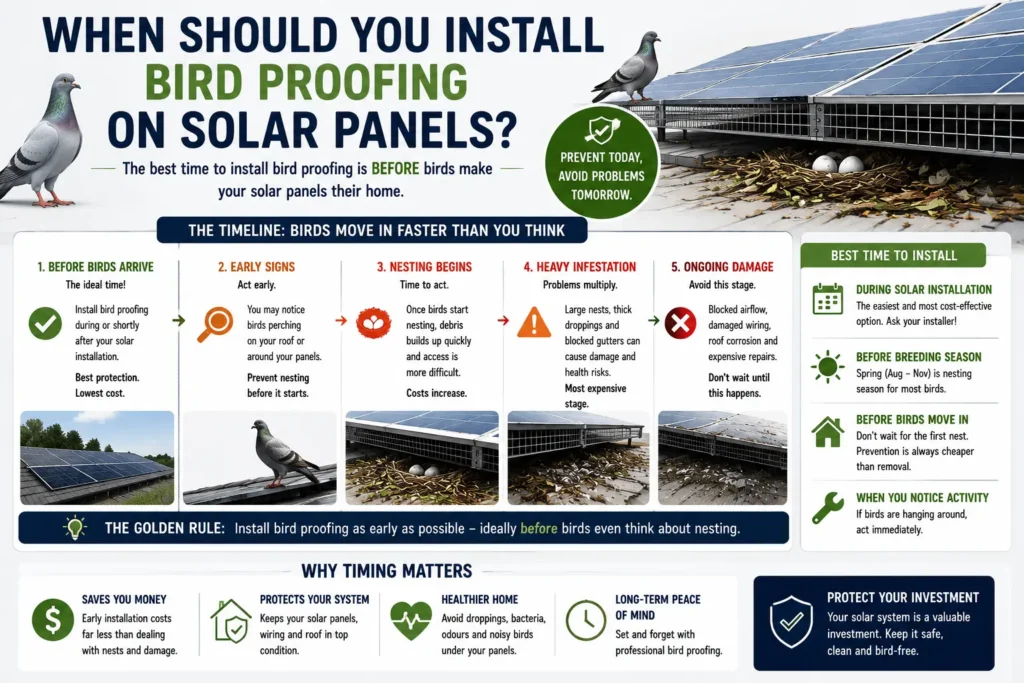
The best time to install bird proofing on solar panels is before birds ever start nesting underneath them.
But if you already have pigeons visiting your roof, the next best time is as soon as you notice the first signs of activity.
One of the biggest mistakes homeowners make is waiting too long.
From our experience working on roofs across Sydney, pigeon problems almost always get worse over time once birds start nesting under solar panels.
The earlier the issue is addressed, the easier and cleaner the solution usually is.
Why Birds Nest Under Solar Panels
Solar panels create a sheltered space underneath the system that pigeons love using for nesting.
The gap underneath provides:
- protection from weather
- shelter from predators
- warmth
- and a quiet space to raise young
Once pigeons decide your roof is a good nesting location, they often keep returning repeatedly.
That’s why timing matters so much.
If birds are allowed to stay underneath the panels for long periods, they become more attached to the location and the nesting activity usually grows over time.
You can also read our guide on how to prevent birds nesting under solar panels.
The Best Time to Install Bird Proofing
1. Ideally: Immediately After Solar Installation
From our experience, the ideal time to install bird proofing is as soon as the solar panels are installed.
Why?
Because prevention is almost always easier than dealing with an active nesting problem later.
Installing bird proofing early helps avoid:
- nests forming underneath the system
- gutter contamination
- droppings building up
- ongoing pigeon activity
- and expensive cleanups later on
Many homeowners only think about bird proofing once the problem has already started.
But if pigeons are common in your area, preventative installation can save a lot of future hassle.
2. The Second Best Time: At The First Signs of Activity
If bird proofing wasn’t installed during the original solar installation, the next best time is as soon as you notice birds starting to investigate the roof.
The early warning signs are usually fairly obvious once you know what to look for.
Early Signs You Shouldn’t Ignore
Pigeons Constantly Hanging Around the Roof
Birds occasionally landing on the roof is normal.
But if you start seeing pigeons consistently returning every day, especially around the solar panels, it’s usually a warning sign.
Morning Noise on the Roof
One of the first things homeowners notice is noise early in the morning.
If you hear:
- scratching
- movement
- cooing
- or activity around the panels every morning
there’s a good chance birds have already started nesting underneath.
Birds Carrying Sticks
This is one of the clearest signs.
If pigeons are flying onto the roof carrying sticks or nesting material in their mouths, they’re usually actively building nests underneath the panels.
Birds Crawling Underneath the Panels
If you physically see pigeons disappearing underneath the solar panels, there’s a very high chance they’ve already started nesting there.
At that point, it’s usually best not to wait any longer.
Why Early Bird Proofing Usually Works Better
The sooner bird proofing is installed, the easier the overall situation tends to be.
Homes that deal with the problem early generally have:
- smaller cleanups
- less roof contamination
- fewer pigeons returning afterwards
- and lower overall costs
Once pigeons have been living under the panels for months or years, the nesting area becomes much more established.
That’s when bigger problems usually start developing.
You can also read our guide explaining what happens if bird proofing is delayed too long.
What Happens If You Wait Too Long?
The longer pigeons stay under solar panels:
- the more nesting material builds up
- the more droppings accumulate
- and the harder it becomes to completely stop the behaviour
One thing many homeowners don’t realise is that pigeons become very attached to nesting locations over time.
If they’ve been living under the panels for years, they often continue returning to the roof even after bird proofing is installed simply out of habit.
Eventually they leave once access is blocked properly, but it can take longer.
Homes that act quickly usually see pigeons move on much faster after installation.
Is There a “Best Season” for Bird Proofing?
Not really.
Pigeons can nest throughout the year in Sydney.
There may be periods with heavier activity, but from our experience, if pigeons have already chosen your roof as a nesting site, they will continue returning during future mating cycles.
That’s why waiting for a “better season” usually isn’t necessary.
The earlier the access underneath the panels is blocked, the better.
Can You Add Bird Proofing Later?
Yes.
Most bird proofing jobs are actually installed years after the solar panels were originally put on the roof.
You can also read our guide about adding bird proofing to existing solar panels.
Most residential systems can be retrofitted with perimeter mesh without removing the solar panels themselves.
What Professional Bird Proofing Usually Involves
A professional installation usually includes:
- inspecting the nesting activity
- cleaning out nests and debris
- checking underneath the panels
- installing perimeter mesh securely
- and sealing off access points properly
The goal is to physically stop birds from accessing underneath the system long term.
Our solar panel bird proofing service in Sydney uses stainless steel mesh and specialised solar clips designed specifically for solar systems.
Final Thoughts
If you’re wondering when to install bird proofing on solar panels, the answer is simple:
The earlier, the better.
Preventative installation is usually the easiest and cleanest option, but even if birds have already started nesting, acting quickly can still save a lot of trouble later.
The longer pigeons stay under the panels, the more established the nesting area becomes and the harder the problem usually is to manage.
FAQs
When is the best time to bird-proof solar panels?
Ideally, bird proofing should be installed as soon as the solar panels are installed. If not, it’s best to act as soon as you notice early signs of pigeon activity.
What are the first signs birds are nesting under solar panels?
Common early signs include:
- pigeons constantly on the roof
- scratching or cooing noises
- birds carrying sticks
- and pigeons crawling underneath the panels
Should I wait until the nesting gets worse?
No. In most cases, waiting makes the cleanup bigger, increases contamination and makes pigeons more attached to the nesting location.
Do pigeons leave on their own?
Usually not. Once pigeons establish a nesting area under solar panels, they often continue returning repeatedly unless access is physically blocked.
Can bird proofing still be installed after pigeons start nesting?
Yes. Most solar systems can still be retrofitted with bird proofing mesh even after nesting has already started.
Is there a best season to install bird proofing?
Bird proofing can generally be installed year-round. Pigeons can nest throughout the year in Sydney.
How long does bird proofing last?
That depends on the materials and installation quality. Professionally installed stainless steel mesh systems generally provide long-term protection for many years.