
Pigeon Deterrents For Solar Panels In Sydney: What Actually Works Long Term?
The most reliable long-term pigeon deterrent for solar panels is usually a physical barrier that stops birds getting underneath the panels. Spikes, fake owls, reflective items and sprays may look like quick answers, but they do not close the sheltered gap that pigeons are trying to use.
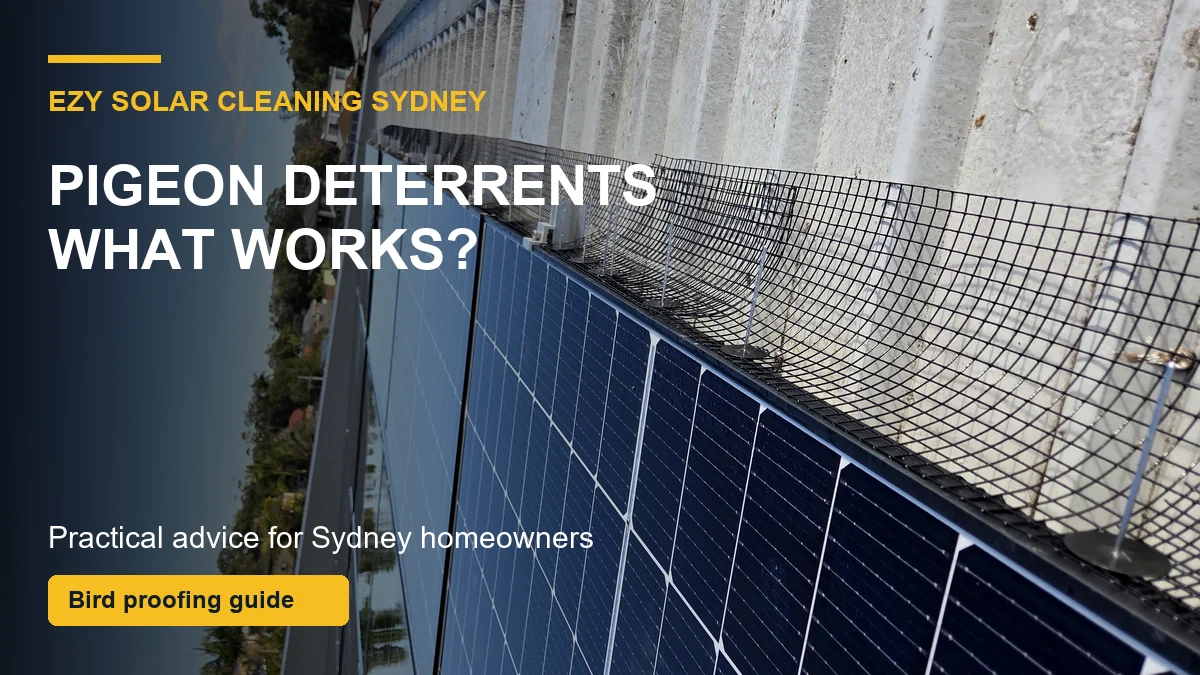
For Sydney homes with repeated bird activity, solar panel bird proofing is normally more practical than trying one deterrent after another. The aim is not to scare birds for a day. The aim is to remove their access to the nesting space.
Why pigeons choose solar panels in the first place
Pigeons are not attracted to solar panels because the panels are special. They are attracted to the space underneath them. The gap can provide shade, shelter from wind and rain, and a protected place to build nesting material.
Once pigeons have used a roof successfully, they can become persistent. They may come back after nest removal, walk along panel edges, or test corners where they remember getting underneath before.
Common deterrents Sydney homeowners try
Many homeowners try simple deterrents first because the problem looks small from the ground. That is understandable. A few birds sitting near the panels may not look like a serious roof issue at first.
| Deterrent | What it may do | Why it often fails under solar panels |
|---|---|---|
| Bird spikes | Discourage landing on a narrow strip | Birds can still land nearby and walk under the panels |
| Fake owls or snakes | May startle birds briefly | Pigeons often get used to them |
| Reflective discs or tape | May create movement or glare | Does not block the entry point |
| Sprays or smells | May shift birds temporarily | Weather and persistence reduce the effect |
| Nest removal only | Clears existing mess | Leaves the sheltered cavity open |
Why spikes are not the same as mesh
Spikes can be useful in some bird-control situations, but solar panels create a different problem. If the gap under the array is still open, birds can land on another part of the roof and walk into the protected space. That is why the existing Sydney guide comparing bird mesh and spikes is worth reading if you are weighing up both options.
Mesh works differently. It is fitted around the exposed perimeter of the panel array so birds cannot get underneath. It does not need to frighten the bird. It simply removes the access point.
What actually works long term
A long-term result usually needs three things: a proper clean-out where birds have already nested, full perimeter coverage, and suitable mesh fixed with solar-specific clips. Missing one of those steps can leave the homeowner with a roof that looks partly treated but still gives birds a way in.
The best installation should be neat from the ground, tight around corners, and shaped carefully around brackets and awkward sections. Pigeons only need one missed gap, so workmanship matters as much as the product.
When a deterrent might be enough
If birds are only occasionally landing on a fence, ridge or antenna, a basic deterrent may help. But when they are moving under solar panels, carrying sticks, leaving droppings near the array, or returning every morning, the issue has usually moved beyond casual landing behaviour.
At that stage, it is better to think in terms of prevention. The article on pigeons nesting under solar panels in Sydney explains why that sheltered panel cavity can become so attractive once birds discover it.
How to avoid wasting money on the wrong fix
Before paying for any deterrent, ask what exact access point it is solving. If the product only stops birds landing on one visible edge, it may not solve birds walking underneath from another side. If the quote includes mesh, ask whether it covers the full perimeter and whether old nesting material is removed where required.
A good quote should explain the method clearly. If you are comparing providers, this guide to choosing a solar panel bird proofing service in Sydney covers the practical questions to ask before booking.
The bottom line
For solar panels, the best pigeon deterrent is usually not something that tries to make birds nervous. It is a well-installed barrier that stops them getting under the panels in the first place.
That is the difference between hoping pigeons move on and actually removing the nesting space they came for.
FAQs
Do bird spikes work on solar panels?
Bird spikes may stop pigeons landing on one narrow edge, but they usually do not stop birds walking under solar panels if the gap remains open.
Do fake owls keep pigeons away from solar panels?
They may work briefly, but pigeons often become used to them. Fake owls do not block access under the panels.
What is the best pigeon deterrent for solar panels?
A properly installed bird mesh barrier is usually the best long-term option because it physically blocks birds from nesting underneath.
Should nests be removed before mesh is installed?
Yes, accessible nesting material and debris should be removed where required before the barrier is finished.
Can pigeons still come back after bird proofing?
They may inspect the roof for a while, especially if they nested there before, but they should not be able to get under the panels if the mesh is installed properly.
Is bird mesh visible from the ground?
A neat black mesh installation should blend with the panel edges and usually looks discreet from normal ground level.