
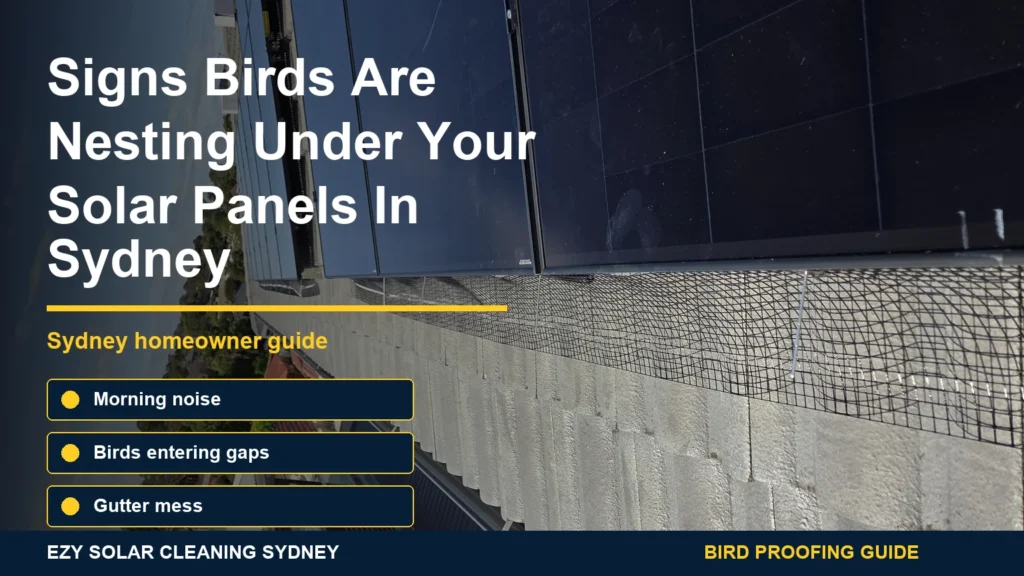
Signs Birds Are Nesting Under Your Solar Panels In Sydney
Birds nesting under solar panels can be hard to spot at first. From the ground, your roof might look mostly normal, but pigeons may already be using the space under the panels for shelter, nesting, and regular roof activity.
For Sydney homeowners, the clearest warning sign is not always a visible nest. More often, it is a pattern: the same birds sitting near the panels every day, morning noise from the roof, droppings building up below one area, or birds disappearing under the panel edge.
If you notice those signs early, the clean-up is usually simpler than waiting until the roof, gutters, and panel area are heavily contaminated.
Why Birds Nest Under Solar Panels
Solar panels create a protected gap between the panel and the roof. To pigeons, that space can feel like a safe nesting cavity.
It gives them:
- shade
- shelter from rain and wind
- protection from easy disturbance
- a stable place to build nesting material
- warmth from the roof area
- a high position with good visibility
This is why pigeons often return to the same solar array again and again. If they have nested there once, they may keep inspecting the same spot until the access point is blocked.
For a deeper explanation, see why pigeons live under solar panels in Sydney.
The First Sign: Birds Keep Returning To The Same Spot
One pigeon sitting on a roof once does not always mean there is a nesting problem. The concern starts when birds keep returning to the same part of the roof.
Watch for pigeons:
- sitting beside the same solar panels most mornings
- walking along the lower panel edge
- landing near the same gutter line
- disappearing behind or under the panel frame
- returning shortly after being scared away
This repeated behaviour matters because pigeons are location-oriented. If they find a sheltered space they like, they may keep testing it.
If you see birds near the same solar array every day, it is worth paying attention before the problem becomes harder to clean up.
Birds Disappearing Under The Panel Edge
This is one of the strongest signs.
If you can see birds walking along the roof and then vanishing under the solar panels, they are not just resting on the roof. They are accessing the cavity beneath the panels.
That space may already contain:
- nesting material
- feathers
- droppings
- eggshells
- old debris
- birds actively nesting
From the ground, you may not be able to see what is underneath. But if birds are entering the gap, the issue is usually active.
At that point, nest removal alone is unlikely to be enough. The access point needs to be closed properly, usually with professional solar panel bird proofing in Sydney.
Morning Noise From The Roof
Many homeowners first notice the problem because of noise.
Common sounds include:
- scratching
- flapping
- cooing
- birds moving under the panels
- noise near the bedroom side of the roof early in the morning
This can be especially annoying because pigeons are often active early. If the solar panels are above a bedroom, home office, or living area, the noise can become hard to ignore.
Noise does not always tell you how much mess is under the panels, but it does suggest birds are spending time there. If the sound is coming from the same area repeatedly, it is worth investigating.
Droppings Building Up Below One Roof Area
Droppings are one of the easiest signs to notice from the ground.
Look around:
- gutters
- downpipes
- paths
- driveways
- outdoor furniture
- walls below the roofline
- clotheslines
- pool surrounds
- balconies or decks
If droppings are building up below one section of solar panels, birds may be sitting or nesting above that area.
This is different from the occasional bird dropping. A repeated build-up in the same location usually means regular bird activity.
If droppings are also on the solar panel glass, solar panel cleaning in Sydney may be worth considering after the bird issue is dealt with.
Nesting Material Around The Home
Pigeons bring material into the roof space under the panels. Some of it may fall or wash down.
You may notice:
- twigs
- dry grass
- feathers
- leaves
- small sticks
- eggshells
- loose debris near gutters
This is a strong warning sign, especially when it appears below the solar array.
Homeowners are often surprised by how much material can build up under panels. What looks like a small bird problem from the ground may be a much larger mess underneath.
One Gutter Section Keeps Getting Dirty Or Blocked
Bird activity under solar panels can affect nearby gutters.
If one gutter section becomes dirty faster than the rest, or if a downpipe starts blocking near the solar array, birds may be dropping nesting material and debris into that area.
This can happen when:
- nests are built close to the gutter line
- droppings wash down from the panel area
- feathers and nesting debris collect on roof tiles
- birds sit above the same roof edge every day
A dirty gutter by itself does not prove birds are nesting under panels, but combined with daily pigeon activity, it is a useful clue.
Panels Looking Dirtier Than Expected
Solar panels naturally collect dust, pollen, and general grime over time. But bird activity can create heavier, more uneven contamination.
Look for panels that have:
- droppings on the glass
- dirty streaks near the lower edge
- grime around the frame
- debris sitting near brackets or panel joins
- one section looking much worse than the rest
Do not climb onto the roof to check closely. If there is visible bird mess from the ground, there may be more hidden underneath the panels.
Cleaning can remove visible contamination, but if birds are still getting under the panels, cleaning alone will not stop the mess from coming back.
Pigeons Sitting On Nearby Antennas, Ridges, Or Roof Edges
Sometimes birds do not sit directly on the panels. They may sit nearby and move under the panels when they feel safe.
Common waiting spots include:
- roof ridges
- TV antennas
- gutter edges
- neighbouring rooflines
- pergolas
- fences near the roof
If pigeons are constantly gathering near your solar panels, it may be because they are using the panel cavity as a nesting or shelter area.
This is why it helps to watch the pattern for a few days. The behaviour often tells you more than one quick glance.
When The Problem Has Been There For A While
The longer birds have been under the panels, the more likely you are to see several signs at once.
A more established nesting problem may include:
| Sign | What It May Suggest |
|---|---|
| Daily pigeon activity | Birds have accepted the roof as a regular spot |
| Morning noise | Birds may be moving or nesting under the panels |
| Droppings below one area | Birds are spending time above that section |
| Twigs or feathers near gutters | Nesting material may be falling from under the array |
| Dirty panel edges | Birds may be sitting, nesting, or moving around the panels |
| Birds returning after being scared away | The sheltered area is still attractive to them |
When several signs appear together, it is usually time to stop treating it as a minor nuisance.
Why Waiting Can Make The Job Bigger
Bird problems under solar panels rarely improve just because they are ignored.
Waiting can lead to:
- more nesting material
- heavier droppings
- more hidden mess
- dirtier gutters
- stronger bird habits
- more cleaning required later
- a more unpleasant clean-out
This does not mean every bird issue is an emergency. But if pigeons are actively entering under the panels, early action is usually easier than waiting until the mess builds up.
The best timing is before birds settle properly. The second-best timing is when you first notice repeated activity.
For homeowners comparing timing, see when to install bird proofing on solar panels.
What Not To Rely On
Many homeowners try simple deterrents first. Some may appear to help briefly, but they usually do not solve the access problem under solar panels.
Common short-term attempts include:
- fake owls
- shiny objects
- spikes in the wrong area
- hosing birds away
- removing visible nesting material only
- blocking one side while leaving other gaps open
The problem is that pigeons do not need the whole roof. They only need a way back under the panels.
If the sheltered cavity is still open, they may return.
What A Proper Inspection Should Check
A proper bird proofing inspection should look at the full solar layout, not just the most visible side.
The inspection should check:
- where birds are entering
- whether nests or debris are already present
- whether more than one panel array is affected
- whether gutters have collected mess
- whether panel cleaning is needed
- whether the full perimeter can be protected
- whether corners and side gaps need extra care
- whether safe roof access is available
This matters because birds often enter from the less obvious side. A partial fix can leave the same problem continuing.
The Bottom Line
The main signs birds are nesting under your solar panels are repeated pigeon activity, birds disappearing under the panel edge, morning roof noise, droppings below one area, nesting material near gutters, and panels or roof sections becoming unusually dirty.
If you notice one sign, keep an eye on the pattern. If you notice several signs together, the birds may already be using the solar panels as a nesting space.
The long-term fix is usually not just cleaning or removing nests. It is blocking access under the panels with properly fitted bird mesh so pigeons cannot keep returning to the same sheltered cavity.
FAQs
How do I know if pigeons are nesting under my solar panels?
Look for birds entering under the panels, repeated morning noise, droppings below one roof area, feathers, nesting material, eggshells, and pigeons returning to the same solar array every day.
Is one or two pigeons on the roof a problem?
Not always. One or two birds passing through may not mean nesting. The concern is repeated behaviour, especially if the birds keep sitting near the panels or disappearing underneath them.
Can I see the nest from the ground?
Sometimes, but not always. Many nests are hidden under the panels. You may only notice indirect signs such as droppings, noise, feathers, or birds entering the gap.
Will removing the nest fix the problem?
Usually not by itself. Removing the nest clears the immediate mess, but if the space under the panels remains open, pigeons can return and rebuild.
Should I climb onto the roof to check?
No. Avoid unsafe roof access. Solar panel areas can be risky to inspect without the right equipment and experience.
Can bird proofing be added after birds are already nesting?
Yes. Bird proofing is often added after solar panels are already installed and after birds have started nesting. The job may also involve removing nests and debris before the mesh is fitted.
Do dirty solar panels mean birds are nesting underneath?
Not always. Panels can get dirty from dust, pollution, pollen, and general weather exposure. But droppings, feathers, and repeated bird activity near the same panels can point to a nesting issue.